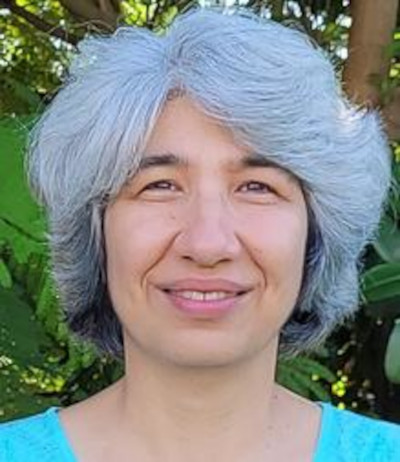
Rashna Bhandari
CDFD, Hyderabad
Dr Rashna Bhandari is a biochemist and cell biologist, and heads the Laboratory of Cell Signalling at the BRIC-Centre for DNA Fingerprinting and Diagnostics (CDFD), Hyderabad, funded by the Department of Biotechnology. Rashna studied human biology at the All India Institute of Medical Sciences, New Delhi, and graduated with a master's and PhD in Biological Sciences from the Indian Institute of Science, Bangalore. She was trained as a postdoctoral researcher at Rockefeller University, New York, University of California at Berkeley, and Johns Hopkins School of Medicine at Baltimore, before taking up her current position as a Group Leader at CDFD, Hyderabad in 2008. Rashna’s research focuses on the biochemical, cellular and physiological functions of two phosphate-rich biomolecules – inositol phosphates and inorganic polyphosphate. She is also involved in the characterization of rare genetic disorders. Elected to the Fellowship of IASc in 2025.
Session 2B – Lectures by Fellows/Associates
Chairperson: S K Apte, University of Mumbai
Protein Pyrophosphorylation by Inositol Pyrophosphates – A Unique Post-Translational Modification
Protein pyrophosphorylation is an emerging post-translational modification, in which an additional phosphate group is transferred to pre-phosphorylated serine residues by inositol pyrophosphates by Mg²⁺-dependent, enzyme-independent mechanism. Occurring primarily in intrinsically disordered, acidic regions of proteins, this modification regulates diverse cellular processes, including rRNA synthesis, vesicle transport, protein stability, and DNA repair. Recent studies have begun to elucidate its biological significance and molecular mechanisms, offering insights into this underexplored regulatory process. Our understanding of the molecular details of this phosphotransfer process from inositol pyrophosphates to generate pyrophosphoserine is still nascent. Our current knowledge of the importance of protein pyrophosphorylation, and recent advances in understanding the mechanism of this important yet under-appreciated post-translational modification will be discussed.