Anant Jain
CHINTA, Kolkata
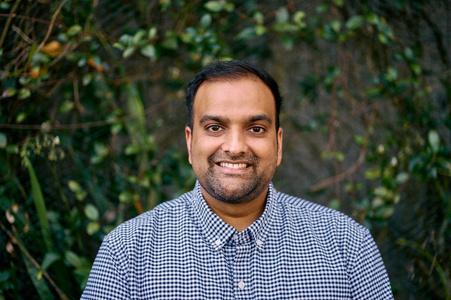
Dr Anant Jain is an Assistant Professor at the Centre for High Impact Neuroscience and Translational Applications (CHINTA), TCG CREST, Kolkata. His research asks how brain turns experience into memory. He studies the circuit, cellular, and molecular mechanisms of hippocampal synaptic plasticity that underlie spatial learning. Dr Jain received his PhD with Catherine Woolley at Northwestern University where he explored the neurophysiological effects of estrogens and trained in computational neuroscience with Erik De Schutter at Okinawa Institute of Science and Technology. During his postdoctoral work with Ryohei Yasuda at the Max Planck Florida Institute for Neuroscience, he identified the instructive signals behind behavioural timescale synaptic plasticity that is important for spatial learning. His lab now combines advanced imaging, electrophysiology, and behavior to connect molecular events to memory. He was selected as a Associate of IASc in 2025.
Session 2B – Lectures by Fellows/Associates
Chairperson: S K Apte, University of Mumbai
Plasticity Mechanisms Underlying Spatial Memories
Hippocampal place cells, once formed, remain stable in a given environment for days, suggesting that activity-dependent synaptic plasticity underlies their induction during spatial learning. Behavioral timescale synaptic plasticity (BTSP), in which a seconds-long plateau potentials integrates with coincident CA1 inputs, has emerged as a key mechanism for CA1 place cell formation. Our previous work identified a distinct molecular signature of BTSP: delayed dendritic spread of CaMKII activation, driven by calcium release from endoplasmic reticulum. The talk will dwell on how plateau potentials may be generated in a context-specific manner, focusing on norepinephrine (NE) dynamics during goal-directed spatial learning on a linear track. NE shows a bidirectional response: it increases phasically at the reward location during early trials but decreases at the same location once the animal has learned the reward contingency. Complementary slice experiments show that NE facilitates BTSP induction by enhancing cellular excitability. Together, these studies link specific molecular and neuromodulatory signals to the synaptic plasticity that support spatial learning during behavior.